
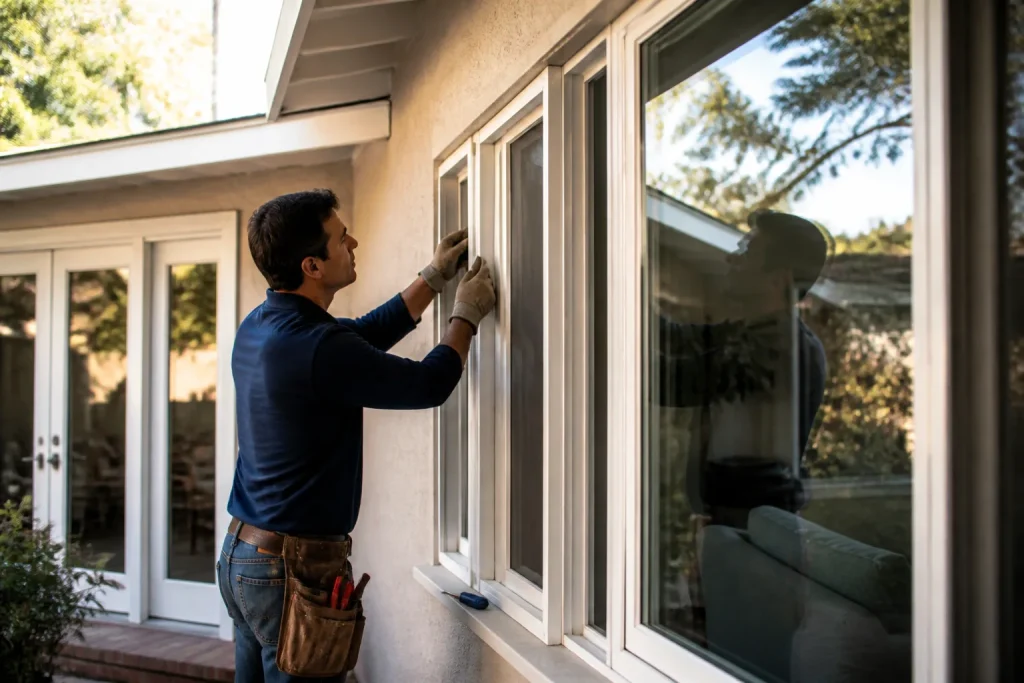
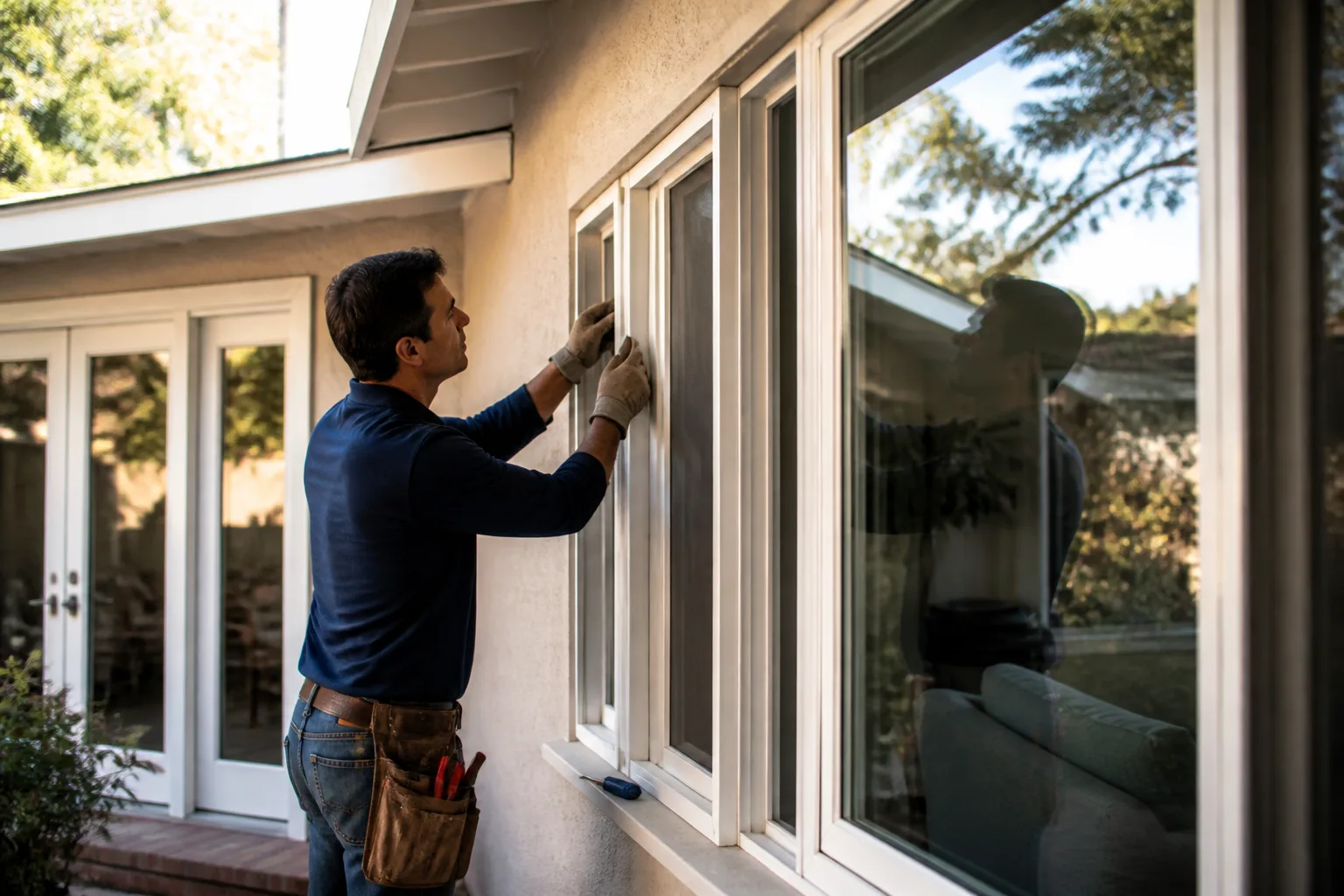
Preparing Your Home’s Windows & Doors for Winter in Los Angeles
Winterizing windows and doors in Los Angeles is less about insulation and more about moisture, wind, and dried-out seals. The first significant rain of an LA winter, typically hitting in late November or December after 6 to 8 dry months, is the most likely moment a window seal or door threshold will leak, because dried-out weatherstripping can’t compress properly until it’s been wet-cycled twice. Here’s what to check before that first storm, and what you can safely skip. If you’d rather not DIY it, call Hale Windows & Doors at (252) 675-6980 and we’ll put a written price in your hands before any work starts.
Key Takeaways
- LA’s real winter threats are rain after a long dry season, Santa Ana winds, and condensation swings, not freezing temperatures.
- Weatherstripping dries out over summer and often fails on the first heavy rain of the season.
- A $8 tool and 90 seconds at each door can catch most leaks before they become wall damage.
- Some problems look cheap to fix but signal a $900 repair underneath. We’ll show you how to tell the difference.
Why Los Angeles Winter Prep Looks Different From Everywhere Else
National winterization guides assume you’re fighting ice dams and sub-zero wind chill. That advice is worse than useless here, it sends you looking for problems you don’t have while the real ones go unnoticed. In Los Angeles, we’re dealing with a specific failure pattern: six to eight months of near-zero rain desiccates neoprene and foam seals until they lose their compression memory. Then the first storm hits with wind-driven rain, and every gap that expanded silently over summer suddenly becomes a leak. Add Santa Ana events pushing sustained 40 to 60 mph gusts against west-facing windows, and you have a set of conditions that most generic winter-prep checklists simply never address.
We’ve worked on stucco-clad homes from Westchester to Eagle Rock, and the story is consistent: the first heavy rain of the season produces a spike in callouts for window leaks and door threshold failures that sat dormant all summer. The good news is that most of these failures are catchable in October with about 20 minutes of inspection and an $8 tool. The bad news is that ignoring them until January means soaked drywall, warped framing, and a repair bill that’s four times what the October fix would have cost.
If you’re looking for a broader picture of what your windows and doors need in this climate, start with our Hale Windows & Doors home page, which walks through the full range of what we inspect and why.
The Dry-Season Weatherstripping Problem: Catch It Before the First Rain
Here’s the thing most LA homeowners miss: your weatherstripping has been quietly failing since June. Neoprene and foam seals rely on compression to stay watertight. When they sit dry for half a year, they shrink, stiffen, and lose the ability to bounce back. By late November, a door seal that looked fine in August has microscopic gaps along the top and sides. The first wind-driven rain pushes water straight through those gaps, and you don’t notice until the baseboard starts warping three weeks later.
The $8 test: buy a cheap incense stick (or use a lit match if you’re careful, though we prefer incense for the longer smoke trail). Wait for a day when the air is still. Light it up and walk every window and door perimeter slowly, holding the smoke about two inches from the seal. If the smoke wavers or gets pulled toward the gap, air is moving through. Air movement means water will follow under rain pressure. This test works best in October, before the first storm, and it takes less than a minute per opening.
What an acceptable gap looks like: on a properly sealed door, the weatherstripping should make visible contact with the frame across its full length. On windows, compression seals should feel slightly springy when you close the sash. If a seal is flattened, cracked, or you can see daylight anywhere along the edge, replace it now. Weatherstripping costs $15 to $40 per door and takes about 30 minutes per opening. It’s the highest-value hour you’ll spend on your home this fall.
Santa Ana Wind Prep: The Two Components That Fail Most Often
Santa Ana events don’t just rattle fences. Sustained 40 to 60 mph gusts push against windows and doors for hours at a time, and that repeated force finds weak points in hardware that normal use never stresses. In our experience across Los Angeles, two components account for more Santa Ana damage than any others: casement window operators and sliding door track hardware.
Casement windows are the crank-operated ones that swing outward. Their operators, the mechanism that translates your hand crank into sash movement, are rated for normal open-close cycles, not for being hammered by wind for six straight hours. When a Santa Ana hits a partially open casement window, the sash acts like a sail, and the operator gear strips. The window then won’t seal shut, which creates the leak that shows up days later. Before Santa Ana season peaks (October through January), open every casement fully and close it slowly. Listen for grinding, feel for resistance, and check that the sash seats squarely against the frame. If you feel any play in the crank, the operator gear is wearing and should be replaced before the wind does it for you.
Sliding door tracks are the second failure point. The rollers that carry patio doors and large sliders wear unevenly, especially if the track has accumulated grit over summer. Under wind load, a door with worn rollers flexes away from the frame, breaking the seal at the top and letting wind-driven rain cascade down the inside face. Run your sliding door back and forth. It should move with even pressure. If it sticks, hops, or you can lift the panel vertically more than a quarter inch, the rollers need attention. Track cleaning and roller replacement typically run $120 to $300 per door, and it’s work we do regularly through our Window Repair in Los Angeles service when the problem extends beyond a quick adjustment.
Condensation Management in LA’s Swing Climate
Los Angeles has a condensation problem that surprises people. When daytime highs swing from 85°F to 48°F at night, interior air holds moisture differently depending on the time of day. Single-pane windows, which are common in older LA homes from Highland Park to West Adams, get cold enough on December and January nights that indoor humidity condenses on the glass. A little condensation on the glass in the morning is normal in our climate. What’s not normal is water collecting on the interior frame, running down the wall, or showing up between the panes of a double-pane window.
Here’s the threshold that matters: if condensation dries by mid-morning and stays on the glass surface, you’re dealing with normal indoor humidity. Running a dehumidifier during the winter months or cracking a bathroom window during showers solves most of it. But if condensation persists all day, soaks into window sills, or appears inside an insulated glass unit (between the two panes), you have a different problem. Frame-level moisture that never dries signals a failing seal, and it feeds mold and rot you can’t see behind the stucco. Foggy insulated glass means the unit’s seal has failed entirely, and the only real fix is replacing the IGU or the window.
In our Los Angeles work, we’ve pulled apart window frames where years of unnoticed condensation had turned interior framing into something you could poke a screwdriver through. The fix at that point is $900 or more in rot repair, versus a $200 early intervention. If your condensation follows you from room to room or drips onto the sill for hours, that’s the moment to have someone look before the wall does.
The 90-Second Door Threshold and Sweep Test
Door thresholds and sweeps are the most neglected parts of LA door preparation, partly because they look fine from a standing position. Get down low. The test is this: close the door behind you, turn off the interior lights if it’s daytime, and look along the bottom where the door meets the threshold. You’re checking for visible light gaps. A properly adjusted threshold and sweep should show no light from the outside, or at most a hairline sliver in one small section.
Why this matters on a stucco-clad LA home specifically: stucco walls are porous. Wind-driven rain hits the exterior wall, runs down, and pools at the base of the door. If your door sweep has gaps, that pooled water gets driven underneath and into the interior flooring. On a raised foundation home, the damage starts slowly and grows for years. On a slab foundation, water has nowhere to go and puddles immediately inside the door. The threshold should be high enough that water can’t simply run over it, and the sweep should make full contact across the width of the door.
Replacement sweeps cost $10 to $25 and clip or screw in place in about 20 minutes. Adjustable thresholds run $40 to $80. If you find light gaps you can’t close with a new sweep, the threshold itself may need replacement, which is a more involved job because it requires removing and resetting the threshold on the framing. That’s when it makes sense to have a professional involved, especially if the framing underneath has started to soften.
When to Call a Pro Before Winter vs. DIY
Most of what we’ve covered so far is DIY-friendly: buy the incense stick, test the seals, replace the sweeps. But there are three specific conditions where a $50 weatherstripping fix is masking a $900 problem, and knowing the difference before winter is the whole game.
Frame rot. If you see peeling paint, soft wood, or discoloration around a window or door frame, that’s not a weatherstripping issue. Rot means moisture has been getting in for a while, and the structural frame is compromised. Squeezing more sealant around a rotten frame is like putting a bandage on a broken bone. The fix involves cutting out the damaged section and splicing in new material, and the longer it waits, the more it costs.
Hardware binding. If a window or door is hard to open, won’t latch, or you have to shoulder it shut, something is out of alignment. Forcing it through the winter only makes the misalignment worse. Binding hardware on a casement window or a sliding door means the frame or the rollers are failing, and that requires replacement parts, not adjustment.
Foggy insulated glass units. Condensation between two panes of glass means the seal on the IGU is dead. No amount of caulking or weatherstripping fixes a failed IGU. The unit needs to be replaced, and if the frame is old enough that the IGU has failed, it’s worth having a Window Replacement in Los Angeles conversation to see whether replacing the entire window makes more sense than patching a unit into a frame that’s nearing the end of its service life.
If you’re in Los Angeles and you’ve found any of these three conditions during your October inspection, don’t wait for the rain to prove the point. Our team does a full assessment at no charge, and we hand you a written price before anyone touches a tool. If you’re not sure which camp you’re in, call and describe what you’re seeing. We’ll tell you straight whether it’s a $20 Saturday project or a job for a pro.
The Bottom Line
Los Angeles winter prep comes down to three things: test your weatherstripping before the first rain, check casement operators and sliding door rollers before Santa Ana winds peak, and learn the difference between normal condensation and a failing seal. Do the $8 incense test in October. Replace any seal that shows air movement. If you find frame rot, binding hardware, or foggy glass, don’t patch over it, call someone who does this work every day and can tell you what’s really going on.
If you’re in Los Angeles and need help, Hale Windows & Doors offers free estimates. We show up with a written price, we tell you who’s coming before they arrive, and every job is backed by our 365-Day Done Right Promise: if it’s not right, we make it right, no argument needed. Call (252) 675-6980 to schedule your free estimate.
Related services in Los Angeles: Window Repair in Los Angeles and Front Door Replacement in Los Angeles cover the two most common winter callouts we see, window leaks and door threshold failures.
Frequently Asked Questions
If you’re doing the basic weatherstripping and sweep replacement yourself, expect to spend $15 to $40 per door for seals and $10 to $25 per door for sweeps, so under $100 total for most homes. Professional inspection and seal replacement on a typical LA home runs $150 to $400 depending on how many openings you have and how much sealing material needs replacement. If the inspection uncovers rot or failed glass units, that’s a separate repair conversation. Call (252) 675-6980 for an exact quote, estimates are free.
October is the right window for LA. The first significant rain typically arrives in late November or December, and you want seals replaced and hardware checked before that first storm, not after. October also gives you time to catch problems while the weather is still dry enough to do the work properly. If you’re reading this in December, don’t wait, the next storm is the test and failed seals don’t reschedule themselves.
Yes, in most cases. Compression weatherstripping and adhesive-backed foam tape are straightforward to install, and the materials are available at any hardware store in Los Angeles. The key is getting the right profile for your specific window or door. If the seal isn’t matching the groove or the thickness is wrong, it won’t compress properly and you’ll have the same leak you started with. If you’re unsure which profile you need, or the window is a specialty brand like CWS or ES Windows, it’s worth a quick call to talk through it. Call (252) 675-6980 and describe what you’re working with, we’ll point you in the right direction.
That’s normal in Los Angeles’s winter climate. Nighttime temps drop into the high 40s, the glass cools, and indoor humidity from showers, cooking, and breathing condenses on the cold surface. As the day warms, the condensation evaporates. If it’s gone by mid-morning and stays on the glass, it’s a humidity issue you can manage with a dehumidifier. If condensation persists all day, soaks the sill, or appears between the panes of a double-pane unit, that’s a failed seal and it needs professional attention before the moisture rots the framing behind the wall.
Written by Spencer Odell, Owner at Hale Windows & Doors, serving Los Angeles since 2009.
Need Windows & Doors Help?
Call Hale Windows & Doors - licensed & insured, here with fast after-hours help in Los Angeles.
(252) 675-6980