
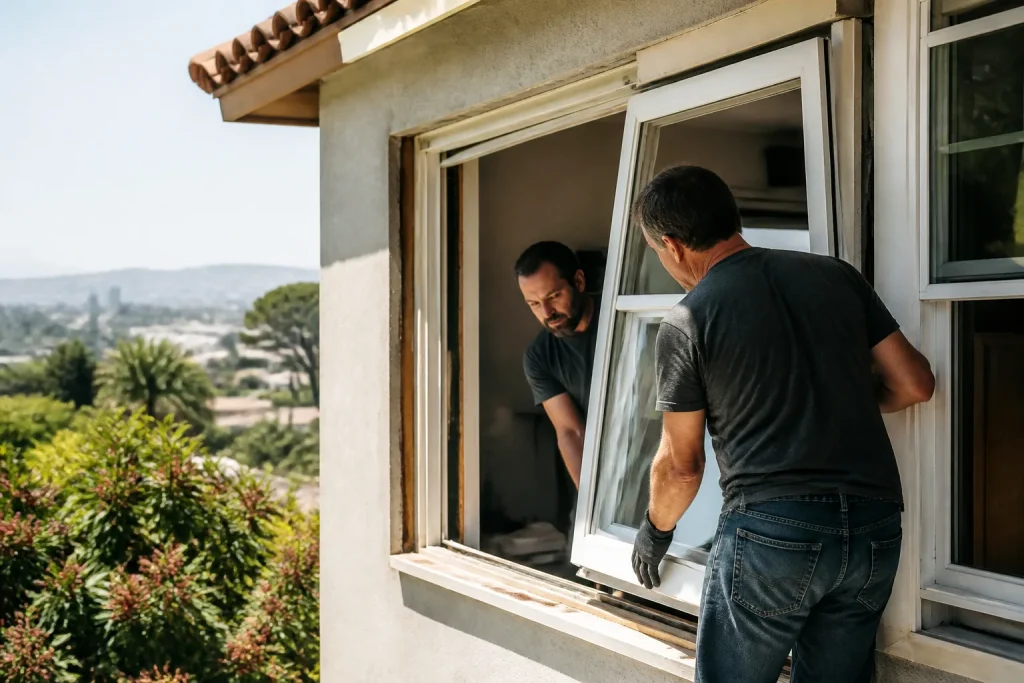
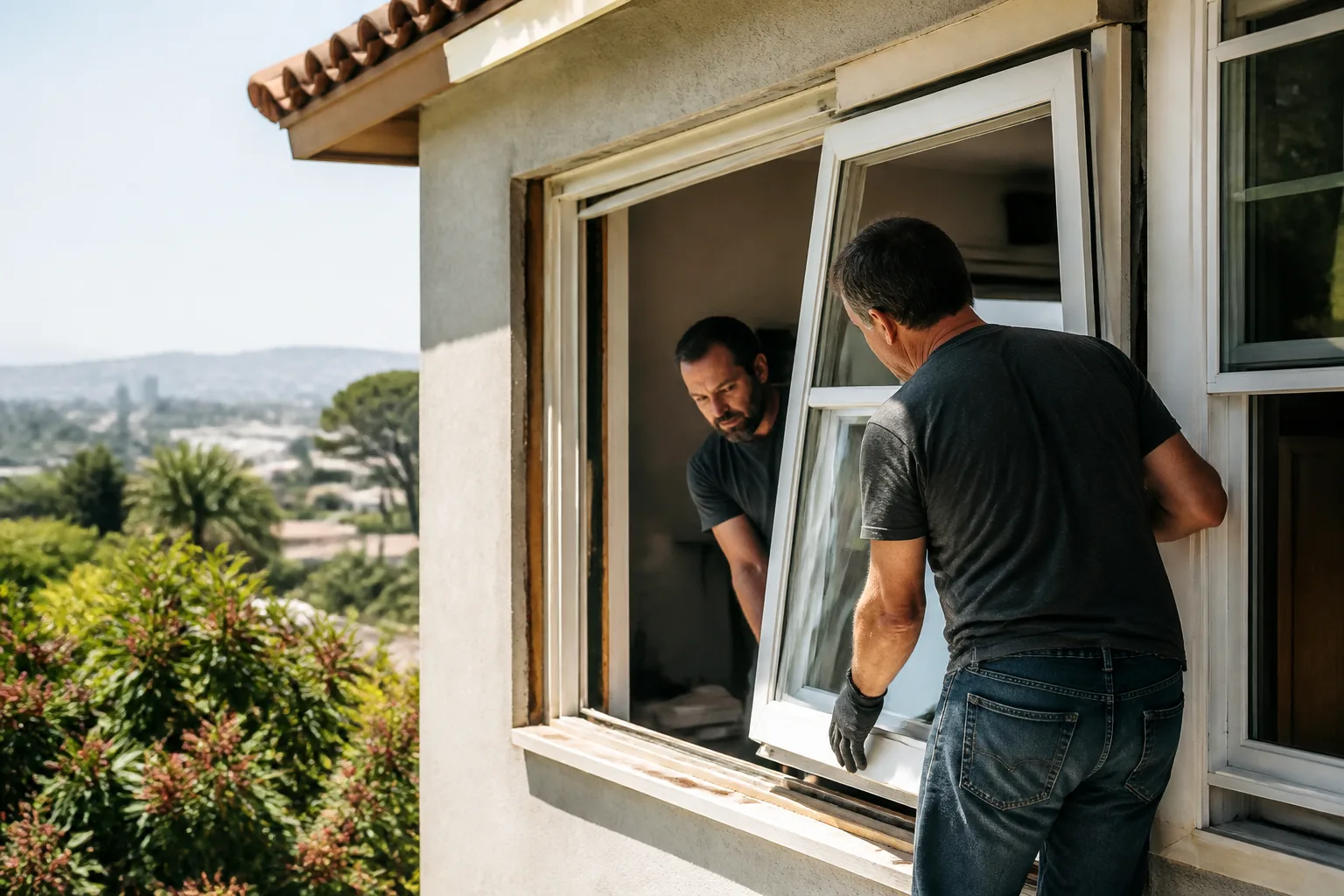
Window Replacement: Repair or Replace? How Los Angeles Homeowners Decide
In most Los Angeles homes, the repair-or-replace question comes down to a three-part test: frame integrity, glass performance, and Title 24 code compliance. If a window fails two of those three, replacement usually wins, and often costs less than a patch job within three years once utility rebates kick in. And if you’d rather not run that math yourself, call us at (252) 675-6980 for a free estimate and we’ll do it with you.
Here’s the mistake we see most often: homeowners treat a drafty or foggy window as a repair problem, when it’s actually an energy-liability problem. California’s Title 24 energy code changed what windows are legally required to do. A single-pane window from 1985 isn’t just inefficient. It’s a code noncompliance that gets disclosed to buyers when you sell. That reframes the whole decision.
The Three-Part Test That Actually Decides It
We use this test on every window we diagnose in Los Angeles, from West Adams bungalows to Sherman Oaks ranchers. It keeps the decision honest.
1. Frame integrity. If the frame is structurally sound, repair is on the table. If water has gotten into the sill and rotted more than roughly 20% of the frame area, you’re looking at replacement. Wood rot in LA doesn’t behave like it does in wetter climates. It comes from sprinkler overspray, unsealed stucco joints, and morning marine layer condensation that never fully dries. By the time you can poke a screwdriver through it, the rot has usually traveled further than you think.
2. Glass performance. A single failed seal in a newer dual-pane unit is often repairable. The glass is still functioning; one insulated glass unit gets replaced. But if the window is single-pane or the low-E coating has failed across multiple panes, the glass is doing nothing for heat gain. In Los Angeles, that means an air conditioner running harder from June through October.
3. Code compliance. This is the one most contractors skip, and it’s the one that matters most in LA. Title 24 sets maximum U-factor (how much heat escapes) and maximum SHGC (solar heat gain coefficient, or how much sun heat gets through). Most windows installed before 1990 fail both. You can legally repair a noncompliant window in place, but you can’t claim it as an upgrade. When you sell, a buyer’s inspector will flag it.
Fail two of three, and replacement wins. That’s not a sales pitch. It’s the financial reality of owning an older home in a climate where cooling costs are the bigger energy drain.
When Repair Genuinely Makes Sense
We’ve talked homeowners out of replacing windows plenty of times. Sometimes repair is the right call, and any honest specialist should tell you so.
Broken hardware. A failed crank on a casement window, a worn balance on a double-hung, a latch that won’t catch. These are mechanical issues, not structural ones. Replacement hardware for major brands is still available, and the fix is often under $200. If the glass and frame are fine, this is a repair.
A single failed seal in a newer unit. If the window is less than ten years old and one insulated glass unit fogs, replacing that unit is usually the right move. The frame and the installation are still good. Why throw away a window that’s 90% functional?
Minor frame rot, caught early. If the rot is localized to a corner of the sill and it’s under 20% of the frame, a competent carpenter can splice in new wood, reseal, and repaint. This is common in older Los Angeles homes with original wood windows. The key word is early. If the rot has reached the rough opening, you’re in replacement territory.
What companies use to upsell unnecessary replacement: “your windows are old and inefficient” without ever testing the glass, or “we can’t match the style” when they just don’t stock the replacement part. Ask for a written diagnosis. If they won’t document why a repair won’t work, get a second opinion.
For a deeper look at what a repair should include, see our page on Window Repair in Los Angeles.
When Replacement Wins in Los Angeles
Replacement becomes the financially smarter move in three situations that we see in LA more than anywhere else.
The window is single-pane. Single-pane glass has no insulating value and no meaningful solar control. In a Los Angeles summer, west-facing single-pane windows turn a living room into a greenhouse by 3 p.m. Title 24 replacement with dual-pane low-E glass (a thin coating that blocks heat while letting light through) typically cuts solar heat gain by 40 to 50%. Your AC runs less, and you notice it in the July bill.
Multiple seals have failed. Once you’re replacing three or four insulated glass units, the math tilts toward full replacement. New dual-pane units with today’s gas fills and low-E coatings outperform a mid-2000s unit by a wide margin. You’re paying for labor either way.
The frames are original to a pre-1980 home. This is the big one in Los Angeles. We pulled a 1970s aluminum sliders out of a Mid-City home last year where the frames were so corroded at the corners that the glass was literally the only thing holding the window square. That’s not a repair. That’s a liability.
When replacement is the call, the product matters. We install and service windows from PGT, CGI, CWS, and ES Windows, among others. The right product depends on your exposure, your stucco depth, your noise situation, and whether you’re in a wildfire-adjacent zone. There’s no single best brand. There’s the right brand for your specific wall.
The Title 24 and Rebate Angle Most Homeowners Miss
Here’s where the repair-versus-replace math in Los Angeles gets interesting. Southern California Edison and LADWP both run rebate programs for Title 24-compliant window replacements. These aren’t small credits. They’re meaningful money.
How the rebates work in 2024
- SoCal Edison offers rebates for energy-efficient window replacements that meet specific U-factor and SHGC thresholds. For climate zone 6 (most of coastal and central LA), qualifying windows typically need a U-factor of 0.30 or lower and an SHGC of 0.25 or lower. Rebate amounts vary by project scope, but we’ve seen checks in the $1,500 to $3,000 range on whole-home replacements that hit the performance specs.
- LADWP runs its own efficiency rebate program with similar eligibility. Their dual-pane window rebates are structured per window or per project, and some programs stack with SoCal Edison if you’re in an LADWP-served area with Edison-delivered electricity. The paperwork is the catch. The window’s NFRC rating label has to match what you file.
So run the 36-month numbers: replace eight single-pane windows with dual-pane low-E, pocket $2,000 in rebates, and save $45 to $70 a month on cooling during the hot season. That’s $540 to $840 a year in energy savings, plus the rebate. A repair that merely patches a 1985 window keeps every one of those costs on your ledger.
The rebates require documentation: a Title 24 compliance certificate from the contractor, NFRC labels, and proof of installation. An honest window specialist handles that paperwork as part of the job. If a company shrugs at the rebate question, that’s a red flag.
What an Honest Diagnosis Looks Like
Before you decide between repair and replacement, get a written diagnosis, not just a quote. A quote says “replace three windows for $4,800.” A diagnosis says “window one has failed low-E coating, window two has significant sill rot with water entry, window three is structurally sound and only needs new hardware.”
We document the following on every window we assess in Los Angeles:
- Frame condition by window. Photos of any visible rot, corrosion, or warping. A moisture meter reading at the sill corner if water entry is suspected.
- Glass condition by pane. Which panes are single, which are dual, which have failed seals, and whether low-E coating is intact.
- Title 24 compliance status. Measured against current U-factor and SHGC requirements for your climate zone.
- Repair feasibility. If repair is viable, what parts are needed, what the repair cost is, and what the repair does NOT fix.
That document is yours to keep, whether you hire us or not. A homeowner shouldn’t have to decode a contractor’s verbal sales pitch. You should have it in writing. That’s the whole point of the written-price policy we run at Hale: you get the diagnosis and the price in your hands before anyone picks up a tool.
The Resale Math: What Buyers Actually Pay For
Los Angeles appraisers don’t give line-item credit for “new windows” on a standard appraisal. But listing agents and buyers absolutely do. Updated dual-pane windows show up in the listing copy, in the selling price, and in the speed of the sale. Buyers touring a 1960s Mar Vista home with original aluminum sliders notice the heat the second they walk in.
The disclosure angle is just as real. California sellers must disclose known material defects, and outdated windows with failed seals or single-pane glass qualify. A buyer who knows the windows need $12,000 in replacement will negotiate that out of the purchase price. You either pay for the windows when you replace them, or you pay for them when you sell. The only difference is whether you got to enjoy them.
Dual-pane low-E windows also reduce outside noise, and in Los Angeles that’s a selling feature. Busy street in West Hollywood? A dual-pane upgrade from single-pane cuts traffic noise noticeably. That’s quality of life while you live there, not just resale value.
If you’re weighing this for a whole house, our page on Window Replacement in Los Angeles walks through the process step by step.
When to Call a Pro
You should call a specialist when any of these is true: you see condensation between panes (failed seal), you feel a draft with the window closed, the window sticks or won’t stay open, you see soft wood or peeling paint at the sill, or you’re planning a sale within three years and know the windows are original. None of those are DIY fixes, and the wrong repair makes eventual replacement more expensive.
Related services in Los Angeles: if you’re replacing a front door alongside your windows, see our Front Door Replacement in Los Angeles page. And for general context on the company and our process, start at the Hale Windows & Doors home page.
The Bottom Line
In Los Angeles, the repair-or-replace question isn’t just about what’s broken today. It’s about Title 24 compliance, utility rebates, and what the window costs you every month on the Edison bill. Repair makes sense for mechanical failures, isolated seal failures, and minor rot caught early. Replacement makes sense when the glass is single-pane, multiple seals have failed, or the frame has lost structural integrity. Fail two of the three-part test, and replacement is the cheaper move over three years.
If you’re in Los Angeles and want a written diagnosis, call us at (252) 675-6980. We’ll tell you plainly which windows are worth repairing and which ones are costing you money. No pressure, no vague promises, just a written price and a clear recommendation.
Frequently Asked Questions
Window replacement in Los Angeles typically runs $600 to $1,400 per window for standard dual-pane low-E vinyl or aluminum, installed. Wood-clad and high-performance products from brands like PGT, CGI, or ES Windows run higher, often $1,200 to $2,500 per window depending on size and installation complexity. Rebates from SoCal Edison or LADWP can offset $1,500 to $3,000 on whole-home projects. Call (252) 675-6980 for an exact quote; estimates are free.
Yes, if the frame is sound and it’s a single failed insulated glass unit in a newer window. The glass unit alone is replaced, which costs less than full window replacement. However, if multiple seals have failed or the window is single-pane, full replacement is usually the better financial call. Call (252) 675-6980 for a written diagnosis.
Title 24 is California’s energy code. It sets maximum U-factor and SHGC ratings for windows in different climate zones. Replacement windows must meet current Title 24 standards, and the contractor must document compliance. Homes with pre-1990 windows typically fail these standards, which matters for resale disclosure and energy costs.
Yes. Window replacement in Los Angeles typically requires a building permit, and the permit process includes verifying Title 24 compliance. We handle the permit application, the Title 24 documentation, and the inspection. It’s part of the job, not an add-on. Call (252) 675-6980 to talk through your specific project.
No. We put the price in writing before any work begins, and that’s the price you pay. No change orders unless you ask for additional work, and no surprise line items on the invoice. If we find something during the job that affects the approach, we stop and talk to you first, in writing.
Written by the team at Hale Windows & Doors.
Need Windows & Doors Help?
Call Hale Windows & Doors - licensed & insured, here with fast after-hours help in Los Angeles.
(252) 675-6980