

Last updated October 9, 2026
Free in-home measure and quote - PGT, CGI and CWS impact lines compared on your actual openings, style by style
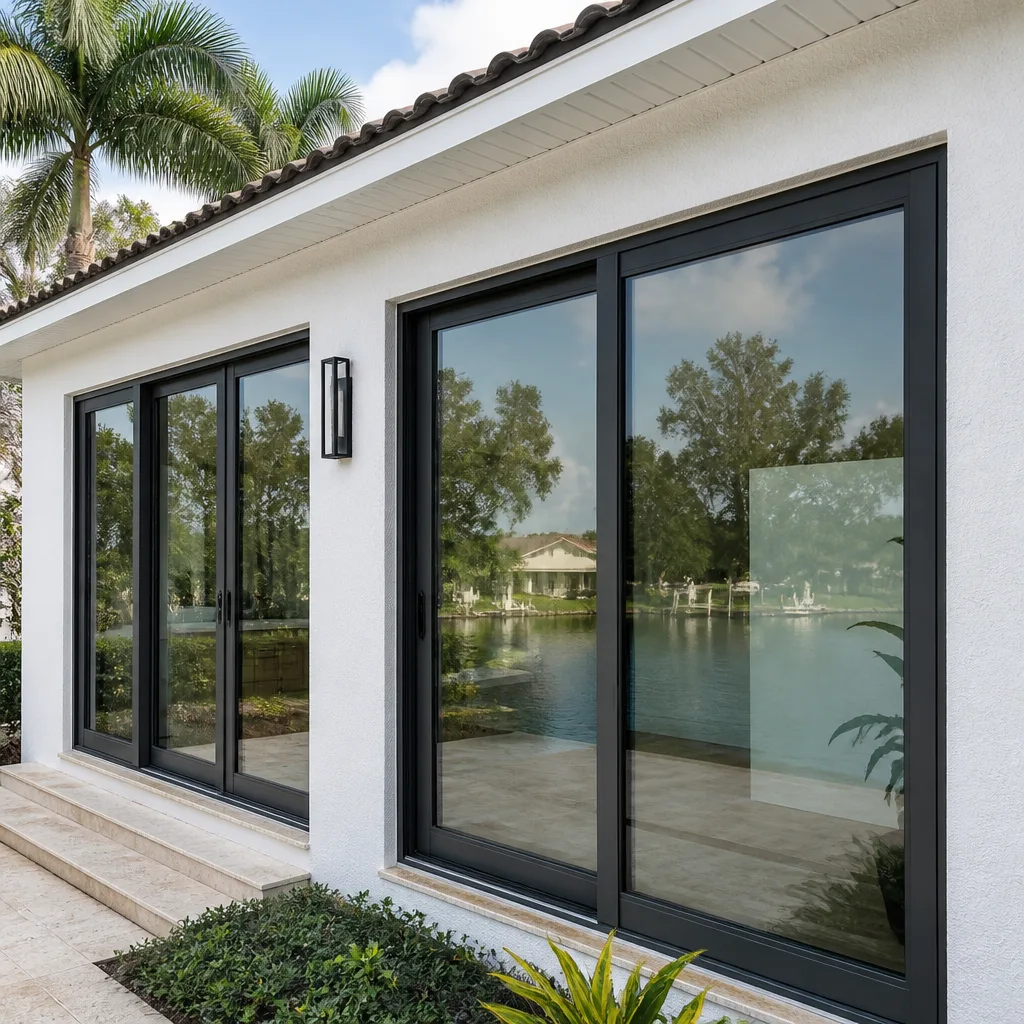
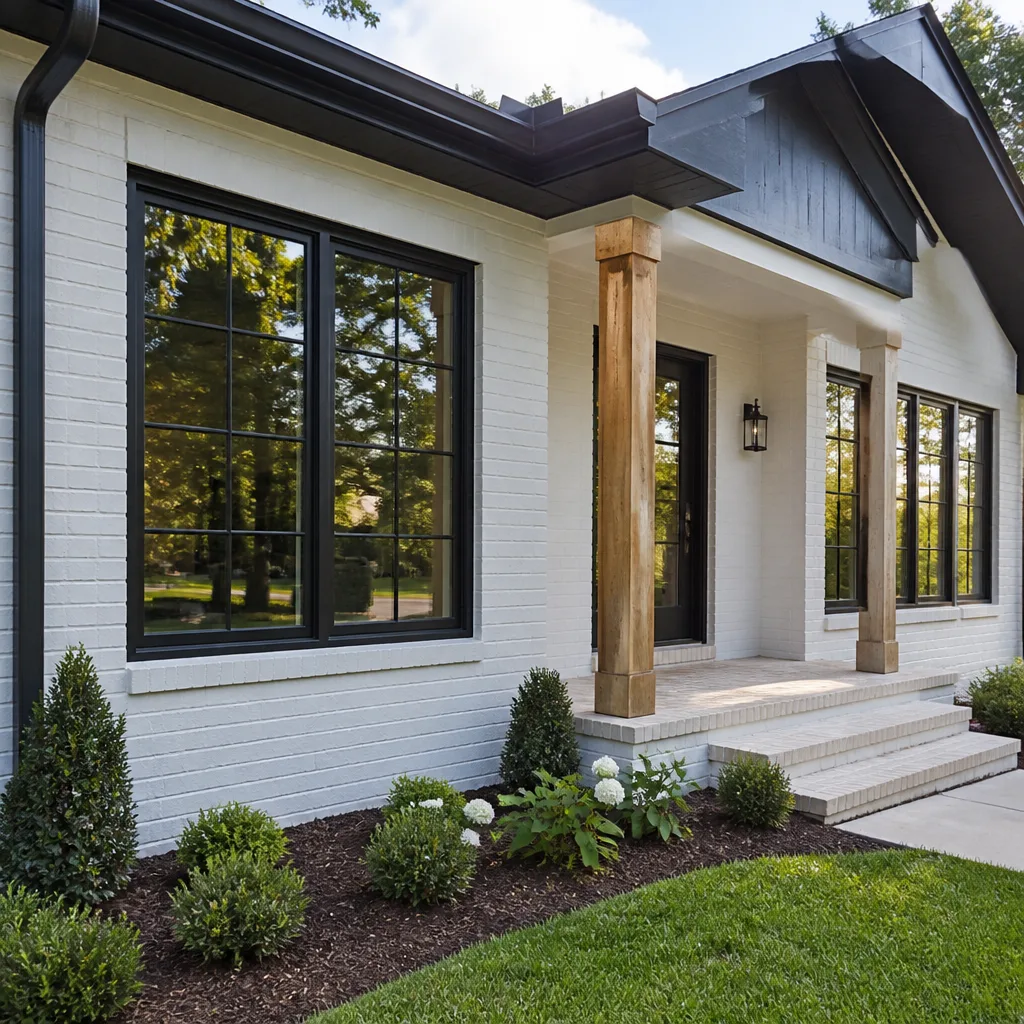
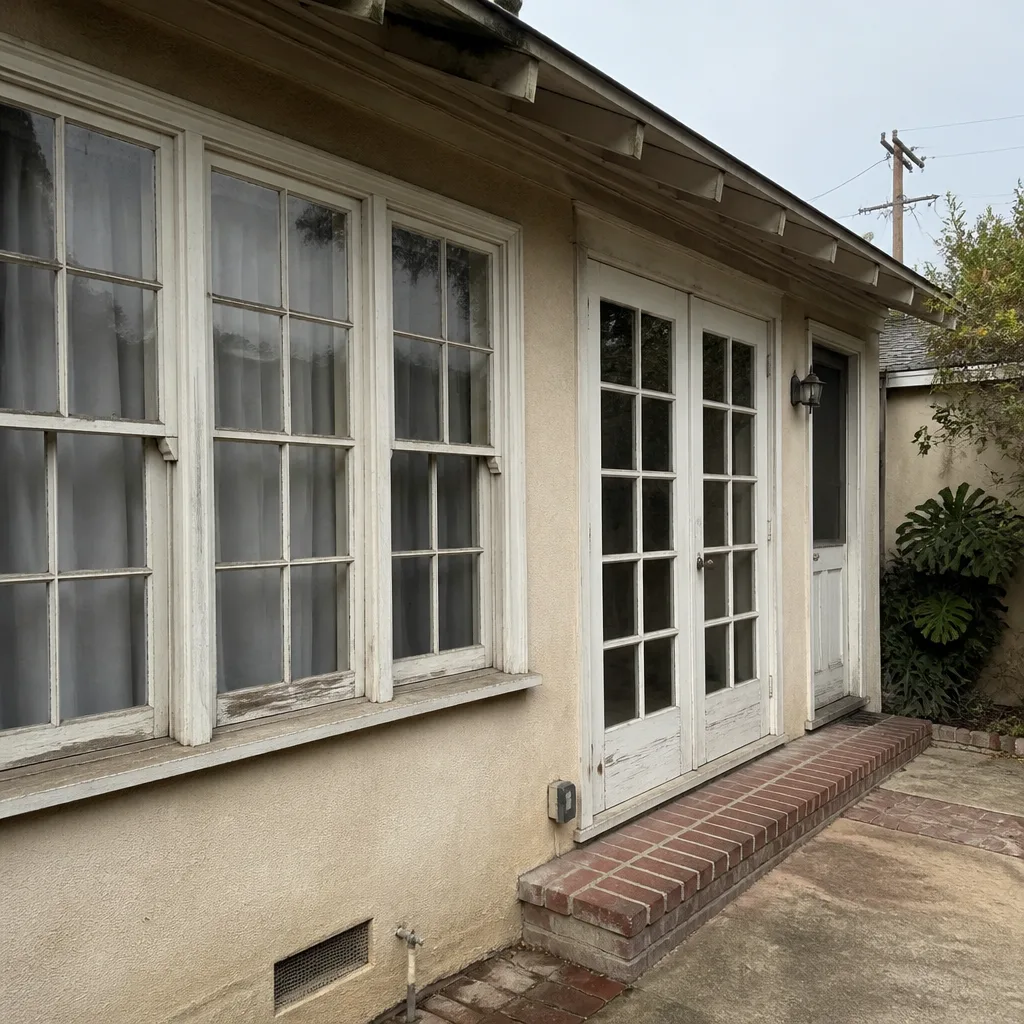 Before
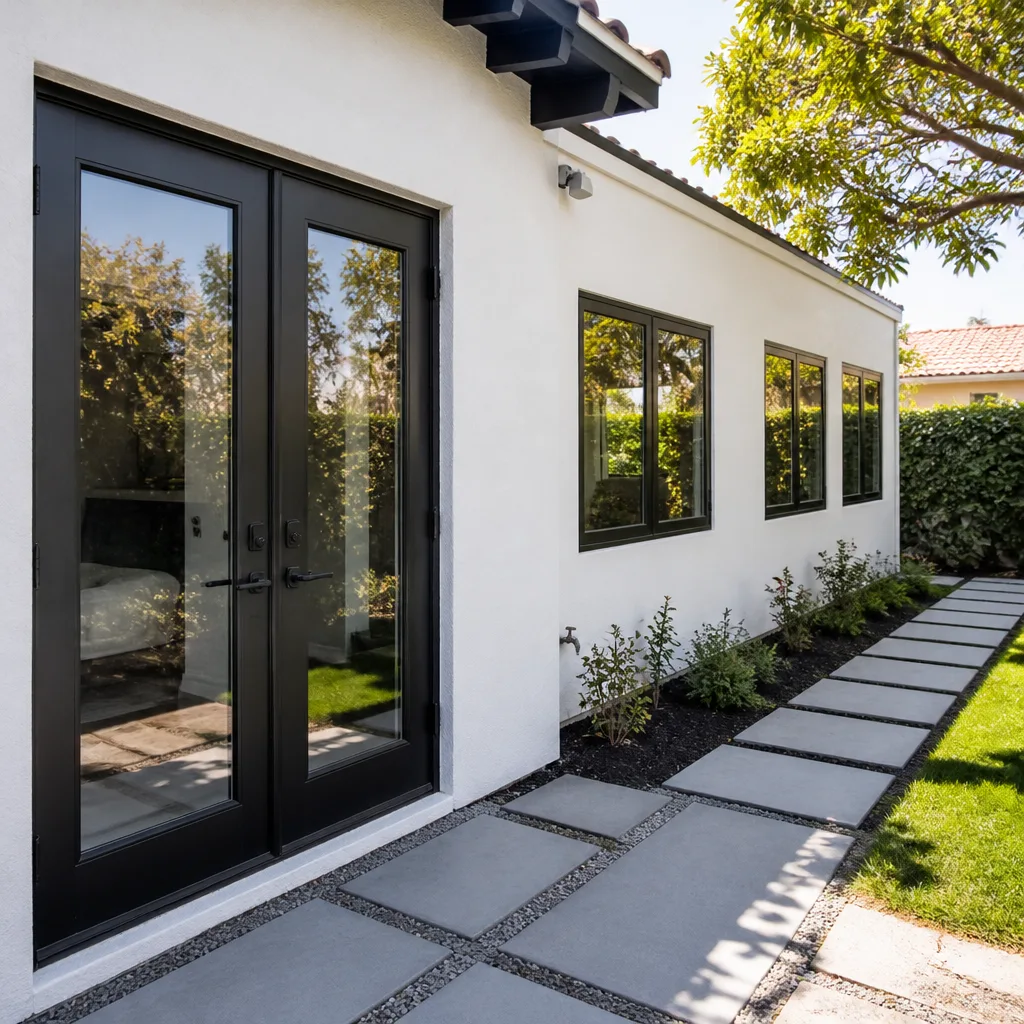 After
After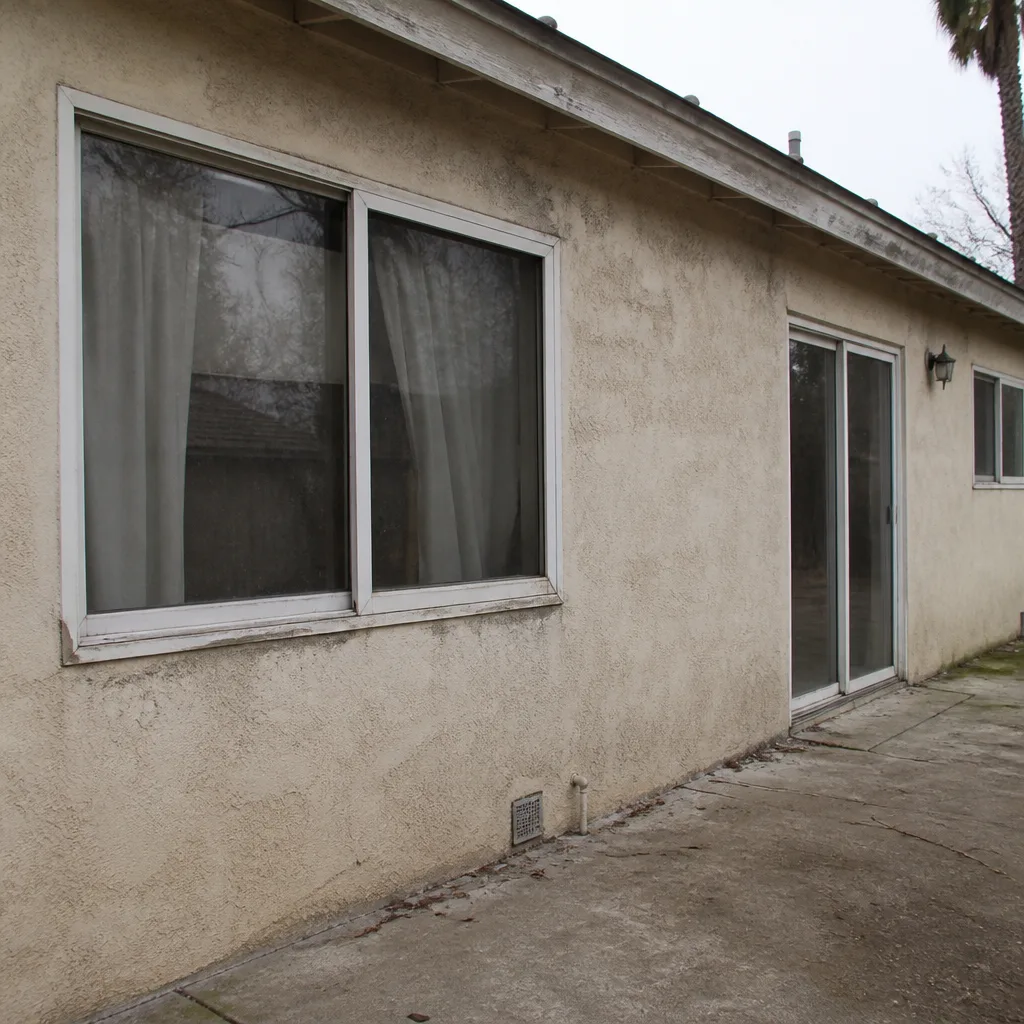 Before
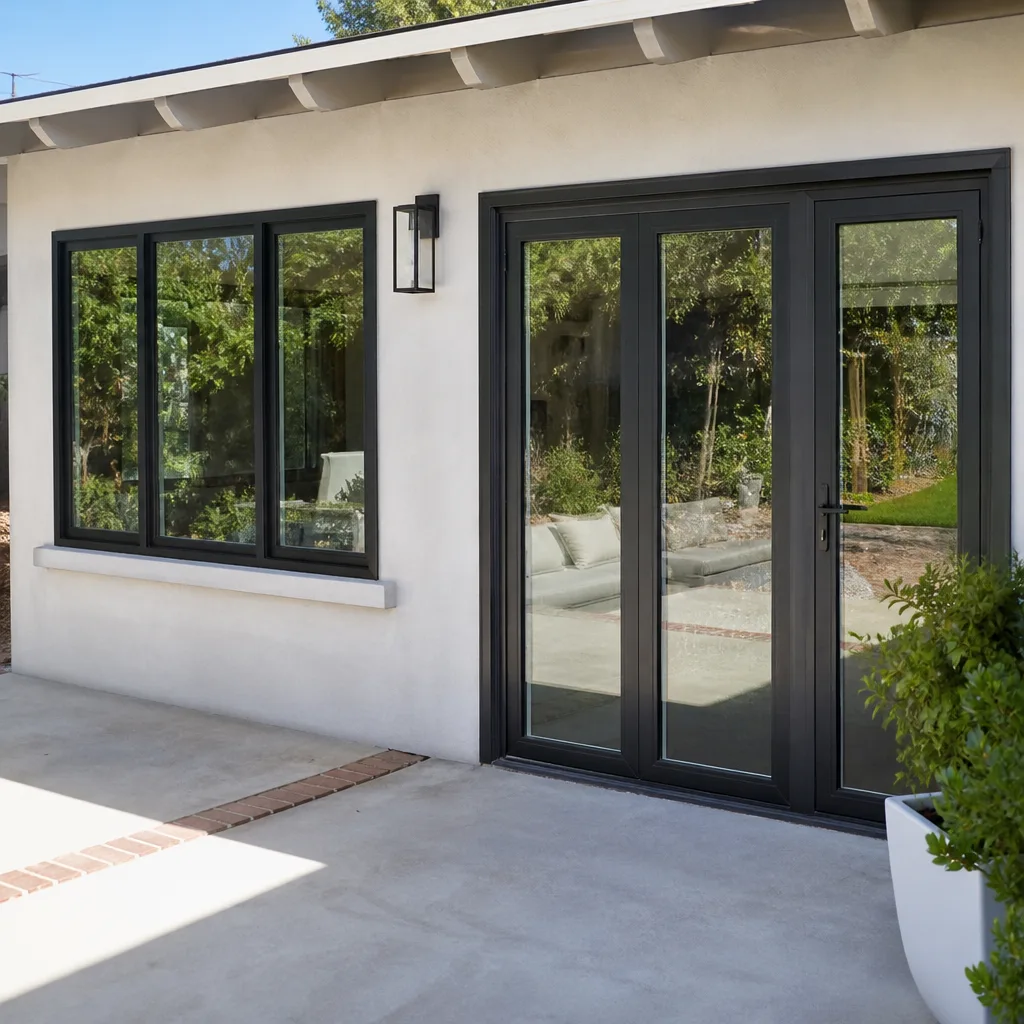 After
After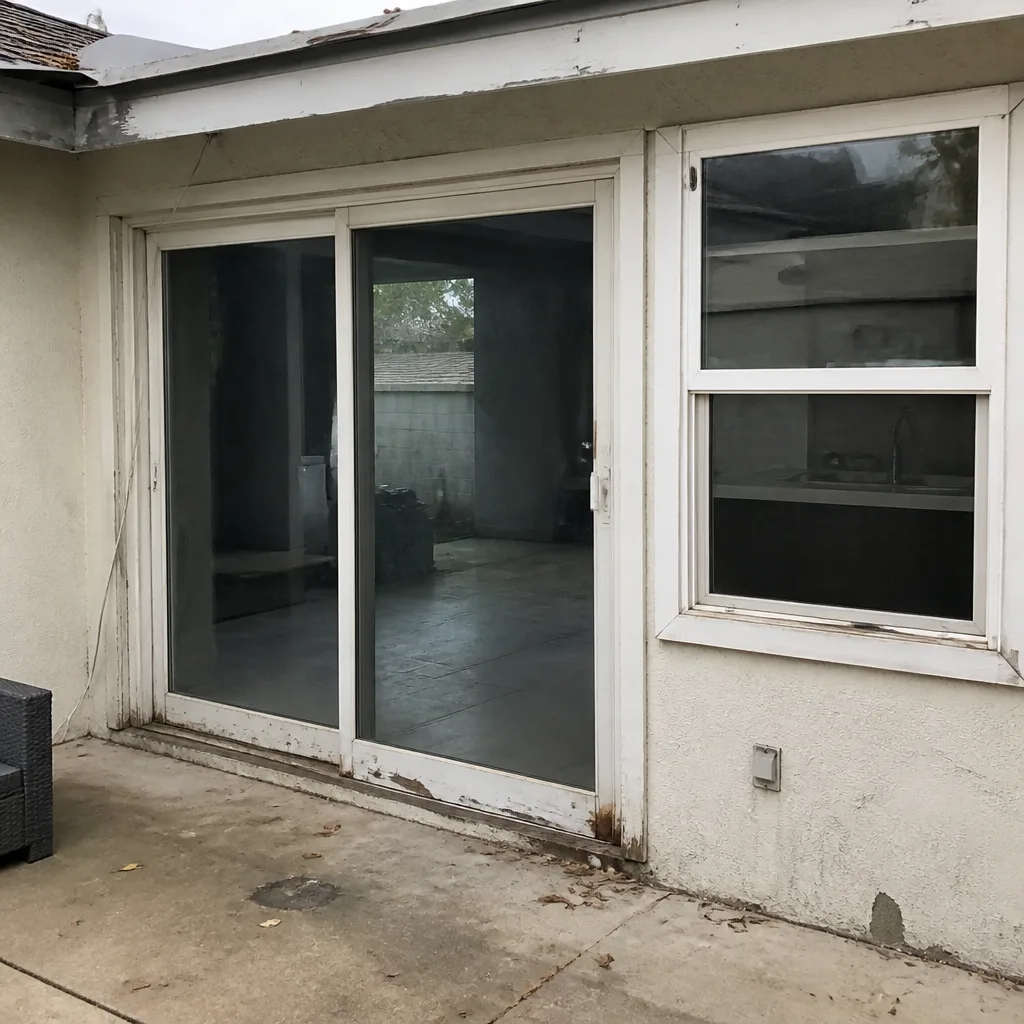 Before
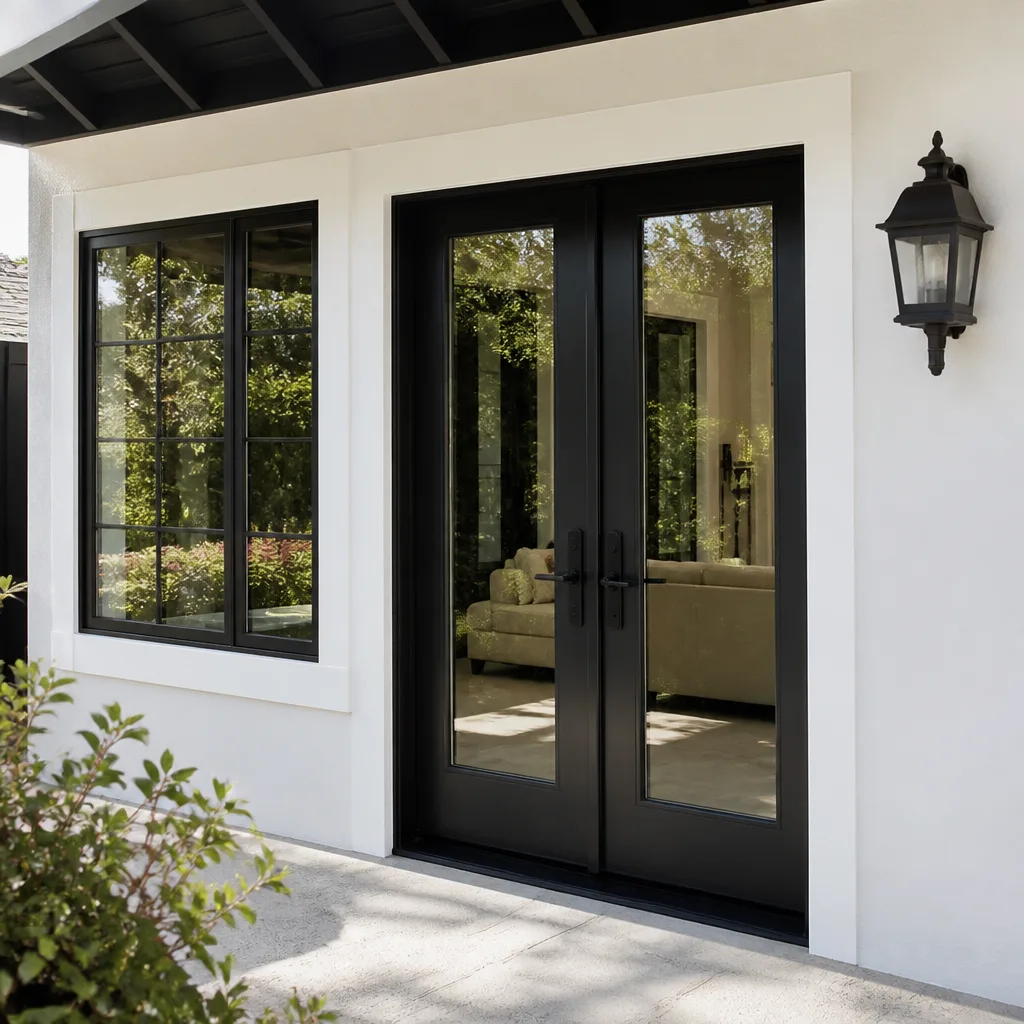 After
AfterThe Complete Front Door Replacement Guide for Los Angeles Homeowners
A Title 24 energy inspection can stop a front door replacement in Los Angeles cold, even after the door is hung, the hardware is on, and the crew has left. California’s energy code applies to replacement doors, not just new construction, and a fiberglass door with the wrong U-factor for Climate Zone 10 can fail a permit inspection. That means the door sits unfinished in your entryway while you wait on paperwork. This guide walks through the three variables that decide whether your Front Door Replacement project in Los Angeles goes smoothly: Title 24 compliance, seismic hardware requirements, and HOA design restrictions.
Quick Answer
Front door replacement in Los Angeles typically costs $1,800 to $5,500 for a standard single door, installed, with the final number driven by door material, hardware grade, permit requirements, and whether your property falls in a Wildland Urban Interface zone. The project usually takes one day for a slab swap and two to three days when the frame is replaced. Before you buy any door, confirm three things: the U-factor meets Title 24 for Climate Zone 10, the hardware package is seismic-rated, and your HOA (if you have one) has approved the finish and style in writing.
Table of Contents
- Title 24 Energy Compliance for Front Doors in Los Angeles
- Door Materials: Fiberglass, Steel, and Wood Against LA’s Climate
- When You Need a Permit for Door Replacement in Los Angeles
- HOA Design Restrictions and Approval Timelines in LA
- Seismic-Rated Hardware: What Los Angeles Homes Actually Need
- What a Legitimate Written Quote Should Itemize
- What Installation Day Looks Like
- Wildfire Ember Resistance for WUI Zone Homes
Title 24 Energy Compliance for Front Doors in Los Angeles
California’s Title 24 building energy efficiency standards apply to replacement doors. The rule is not optional, and it is not limited to new construction. When a contractor pulls a permit in the City of Los Angeles, the replacement door must meet the prescriptive U-factor requirement for Climate Zone 10, which covers greater Los Angeles from the coast through the San Fernando Valley and east into the San Gabriel Valley. For a deeper look at regional considerations, see The Complete Guide to Windows & Doors in Los Angeles.
The current prescriptive U-factor maximum for swinging doors in Climate Zone 10 is 0.20. U-factor measures how much heat passes through the door assembly, and a lower number means better insulation. For context, a typical solid wood door without a thermal break lands around 0.40 to 0.50. A basic steel door with a polyurethane foam core comes in around 0.17 to 0.25. Most quality fiberglass doors from manufacturers like Therma-Tru or PGT test between 0.17 and 0.20, which is why fiberglass has become the default recommendation in Los Angeles.
Air leakage is the second compliance measure. Title 24 has a specific air-leakage requirement for doors, and a properly installed door with compressed weatherstripping and an adjustable threshold will pass. The failure we see regularly in Los Angeles inspections is on retrofit jobs where the installer reused an old frame and did not replace the weatherstripping. The door slab passes, the assembly fails.
If your home is in a Wildland Urban Interface (WUI) zone, which is a substantial portion of Los Angeles hillside neighborhoods and parts of the western Valley, the door must also meet exterior wildfire exposure requirements. That means an ignition-resistant door or a door tested to resist ember penetration. The WUI map matters because it changes which products are even legal to install, not just which are ideal.
Door Materials: Fiberglass, Steel, and Wood Against LA’s Climate
Los Angeles is not one climate. The marine layer in Venice and Playa del Rey puts salt air and morning fog against your entry door three hundred days a year. The inland Valley sees summer temperatures above 100 degrees with intense UV. The foothills above Pasadena and Glendale get dry heat plus Santa Ana winds that carry embers. Each environment punishes materials differently.
Fiberglass
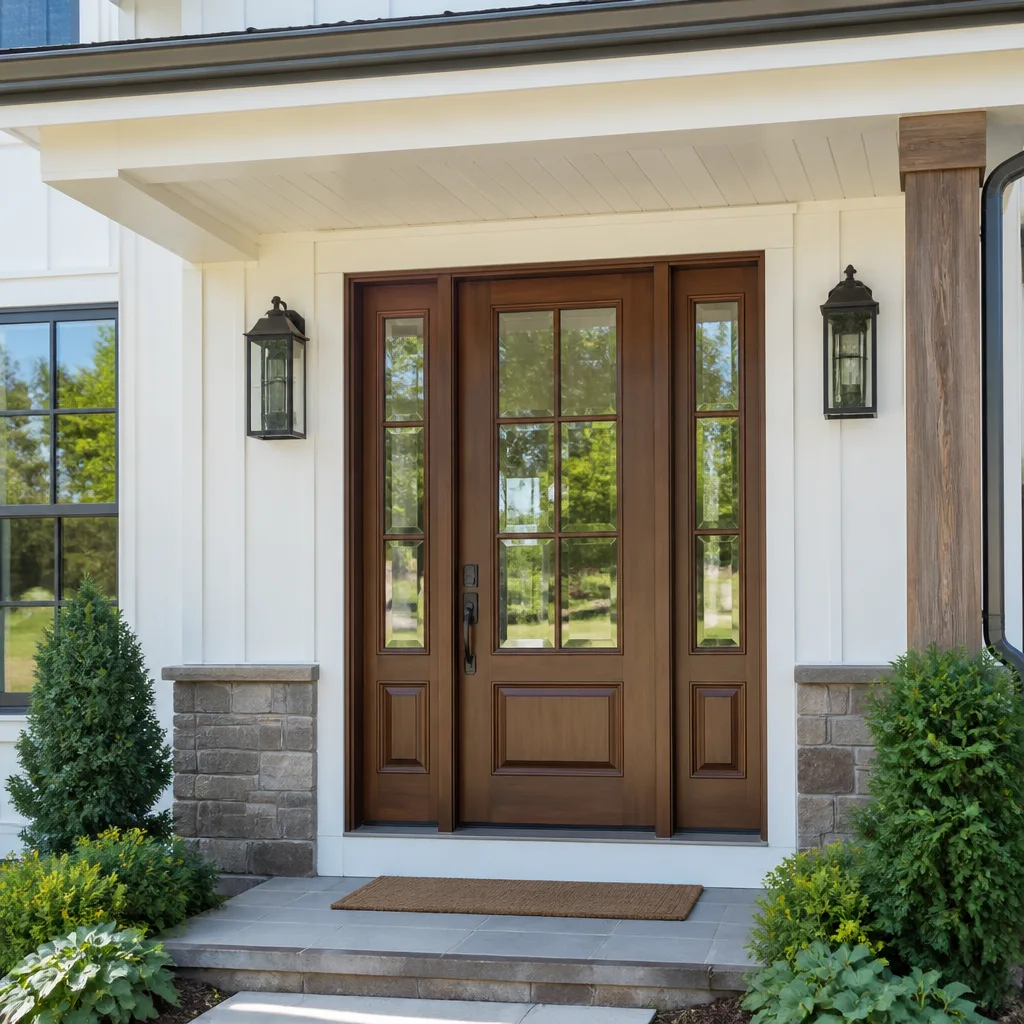
Fiberglass doors are compression-molded composite with a foam core, and they hold up better against UV than either wood or steel in the Los Angeles market. They do not warp in marine-layer humidity, they do not rust, and the finish resists fading for years. Most fiberglass doors on the market today test between 0.17 and 0.20 U-factor, which clears Title 24 in Climate Zone 10 without needing additional glazing packages. The texture options now convincingly replicate wood grain, which matters when an HOA wants a specific look.
Steel
Steel doors are the strongest material against forced entry, and most come with foam cores that hit Title 24 numbers easily. The weakness in Los Angeles is coastal air. Steel doors within a few miles of the ocean are prone to rust at the bottom rail and around the hardware cutouts, especially if the installer does not seal the cut edges. In the Valley, steel reflects heat and can get too hot to touch on a summer afternoon if the door faces west with no porch cover. Steel still makes sense for security-focused homeowners, but we recommend it with a factory-applied rust inhibitor and a full frame replacement rather than a slab swap.
Solid Wood
Solid wood doors are the classic Los Angeles look, especially in Craftsman and Spanish Colonial homes from the 1920s and 1930s. But solid wood fails Title 24 in most configurations without a substantial thermal upgrade, and it moves. Humidity swings from the marine layer cause wood doors to swell and stick, then contract in Santa Ana season and let air through. Wood also requires refinishing every two to three years under LA sun. If the HOA requires wood, the workaround is a wood door with an insulated core and a factory-applied weather barrier, plus a proper overhang to protect it from direct exposure.
When You Need a Permit for Door Replacement in Los Angeles
The City of Los Angeles Department of Building and Safety (LADBS) requires a permit when the door opening is altered in size, when the frame is replaced, or when the door assembly must meet WUI requirements. A like-for-like slab swap, where the existing frame stays in place and the new door is the same size with the same swing, typically does not require a permit under LA’s current administrative policies.
The consequences of skipping a required permit are real and specific. When you sell, a buyer’s inspection can flag the unpermitted door. The City of Los Angeles requires disclosure of unpermitted work for residential sales, and a non-compliant door becomes a negotiation point. If the door fails Title 24 because it was never inspected, the fix means either retrofitting the assembly to comply or replacing it again. For related guidance, see The Complete Window Repair Guide for Los Angeles Homeowners.
How to check whether your specific address triggers a permit:
- Go to the LADBS website and enter your property address into the Permit Application lookup.
- Check whether your property is in a WUI zone using the Cal Fire Fire Hazard Severity Zone map or the city’s own WUI layer.
- Look at your HOA’s architectural guidelines if you have one. HOAs frequently require permits even when the city does not.
- Call LADBS and ask directly. The counter is generally responsive for simple questions about replacement doors.
In our experience, Los Angeles homeowners save the most time when they let the contractor handle the permit. The permit itself is not expensive for a single door replacement, and a contractor who pulls it signals that the job will be inspected. If a contractor tells you the city “never checks” and the permit “isn’t worth it,” that’s a signal to look elsewhere. The permit process for a standard door replacement in Los Angeles is typically straightforward and completed within a few days to two weeks.
HOA Design Restrictions and Approval Timelines in LA
In a condo association or planned community, the HOA’s architectural review committee has approval authority over front door style, color, and hardware finish. This applies even when you own the unit and the door itself. The mistake we see repeatedly in Los Angeles is a homeowner who buys a door, has it installed, and then applies for HOA approval. The committee rejects the finish. The door cannot stay. The contractor charges to remove and reinstall.
Typical HOA approval windows in Los Angeles range from 30 to 60 days. Some communities who manage architectural review through a third-party company run 45 days minimum. If your community’s CCRs specify a response window and the committee does not respond, the approval may be deemed granted, but relying on that rule without confirming in writing is risky.
The sequence that actually works:
- Pull your HOA’s architectural standards and look for the door section before you shop.
- Pick two or three doors plus hardware options that meet the standard.
- Submit all options at once, with product sheets included.
- Get written approval before you order the door. Not verbal. Written.
- If the door size changes by more than a half inch, confirm the structure’s rough opening before you order.
HOAs in Los Angeles dense condo neighborhoods such as Westwood, Century City, Koreatown, and the Wilshire Corridor are generally strict about entry door design because the doors are visible from common hallways. HOAs in single-family planned communities in areas like Porter Ranch, Playa Vista, and parts of West Hills tend to care most about curb view and consistent paint finishes. The rule is the same everywhere: written approval first.
Seismic-Rated Hardware: What Los Angeles Homes Actually Need
Los Angeles building codes do not require seismic-rated hinges and locksets on every single-family front door replacement. What they do require is that the door assembly, when anchored, meet the structural safety requirements of the California Existing Building Code for the seismic design category assigned to your property. In practice, that means your new door needs a properly anchored frame and hardware sized for the weight of the door.
What homeowners miss is this: after an earthquake, a door that shifts in its frame becomes a real problem. If the door no longer latches, your home is unlocked. If the door jams shut, you cannot exit. Multi-point locking systems, which engage at three points along the frame instead of one, are superior in seismic country because they resist racking and keep the door aligned after repeated small quakes. Baldwin and Emtek both make multi-point hardware packages that work with fiberglass door slabs.
For doors over 100 pounds, which includes many solid wood and WUI-rated steel doors, we recommend four hinges with ball-bearing pins instead of the standard three. This is a small upgrade that costs roughly $40 to $80 per hinge and significantly improves long-term sag resistance. In Los Angeles, where door swing and alignment are tested by everything from settling soil in the Valley to repetitive small tremors, it’s a sensible default rather than an upsell.
What a Legitimate Written Quote Should Itemize
A real quote for front door replacement in Los Angeles should be a line-item document, not a single number on a business card. If the price is not in writing before work starts, do not agree to the job. At Hale Windows & Doors, every estimate includes a written price delivered before any work begins, and the price does not change once the job is underway unless you change the scope. Explore more guides & resources on our blog.
Here is what a legitimate written quote for a standard single front door replacement in Los Angeles should include:
- Door slab: the door itself, with the specified material, finish, glass package if applicable, and U-factor listed by product name. Typical range: $800 to $2,400 for a quality fiberglass or steel slab; $2,000 to $5,000 for WUI-rated or hardwood.
- Frame: either a frame replacement or slab swap with frame prep. Frame replacement typically adds $400 to $900 including materials and labor.
- Hardware: handleset, deadbolt, hinges, and any multi-point lock. Budget $150 for basic hardware and $600 to $1,200 for a multi-point system with a name-brand finish.
- Weatherstripping and threshold: $80 to $250, and it should be listed separately since it is a compliance item for Title 24 air leakage.
- Labor: installation. For a standard single door with an existing opening, Los Angeles labor runs $700 to $1,400.
- Haul-away: removal and disposal of the old door and frame. $75 to $200 depending on material and whether the old door contains glass.
- Permit: the permit fee itself, which is a city charge, plus any expediting time. The fee varies but is typically under $300 for a single door.
Total installed for a standard fiberglass front door replacement in Los Angeles, with permit, hardware, and haul-away: $2,200 to $4,200 for most homes. WUI-rated steel or fire-resistant assemblies in the hills run $3,500 to $5,500. If a quote comes in under $1,500 all-in, question what is being left out. More often than not, it is the permit, the weatherstripping, or the hardware grade.
What Installation Day Looks Like
A proper front door replacement is not a one-man job with a drill and a prayer. It is a two-person crew, a set of shims, a level, and a lot of patience with the rough opening. Here is the sequence a professional installation in Los Angeles should follow.
- The old door and frame come out. The rough opening gets inspected for rot, termite damage, and any settling that has pulled the opening out of square.
- The new frame goes in, leveled and shimmed. The installer checks the reveal, which is the gap between the door slab and the frame, and adjusts until it is consistent on all three sides.
- The slab is hung and the hardware is installed. The deadbolt should throw cleanly with no drag.
- Weatherstripping goes on and the threshold gets adjusted. In Los Angeles, where Title 24 air leakage is measured, this step is not cosmetic.
- The final walkthrough covers operation, finish, and cleanup. The old door leaves on the truck, not at the curb.
For a slab swap, the job takes four to six hours on site. For a full frame replacement, expect one full day, sometimes spilling into a second morning when the rough opening needs repair. At Hale Windows & Doors, every technician on the job is background-checked, identity-verified, photo-badged, and sent to you by name and photo before the visit. That is the Threshold Standard, and it exists so you know exactly who is at your door before you open it.
Wildfire Ember Resistance for WUI Zone Homes
If you live in a Wildland Urban Interface zone in Los Angeles, which includes large sections of the Santa Monica Mountains, the Verdugo Hills, the San Gabriel foothills, and portions of the western Valley, your front door is an ember entry point. Research after major California fires consistently shows that embers, not direct flame contact, are the primary ignition source for residential structures. An unprotected door with a gap at the threshold or a combustible weatherstrip can collect embers and ignite.
WUI-compliant doors in California must meet ignition-resistance testing. CGI and CWS both make doors and door assemblies tested for WUI compliance, and ECO Window Systems has options designed for high-wind and ember-exposure zones. The key details on a WUI door:
- The door slab itself is non-combustible or tested to resist ember penetration.
- The weatherstripping is a non-combustible material or protected from direct ember contact.
- The threshold closes the gap completely, with no visible daylight at the bottom corners.
- The door bottom has a door sweep that maintains contact even when the door swells or shifts.
WUI compliance is not the place to save money. The door is your home’s primary entry point, and in a wildfire evacuation scenario it is also an exit path. Make sure the product you buy is actually tested for the standard, not just marketed as “fire-rated” because it has a steel skin. Ask for the test documentation.
Common Mistakes to Avoid
- Buying the door before checking Title 24 compliance. A beautiful door with a 0.35 U-factor will fail in Climate Zone 10. Confirm the tested U-factor before you pay for anything.
- Skipping the permit on a frame replacement. The city may never come looking, but the unpermitted door becomes your problem when you sell. It is a $200 decision that can become a $2,000 negotiation.
- Asking the HOA for forgiveness instead of permission. HOAs collect fines regularly and enforce repainting and replacement. Written approval first, purchase second.
- Reusing the old frame on a new door. This is the single biggest air-leakage failure we see in Los Angeles. The slab passes, the assembly fails, and the Title 24 inspector is not sympathetic.
- Buying hardware by looks alone. A single-point deadbolt on a heavy door in seismic country means the latch will eventually fail. Multi-point is not an aesthetic choice here.
- Ignoring the threshold gap on a WUI property. Embers find the gap. The door sweep and threshold are fire protection, not just weather protection.
- Hiring a generalist who does not pull permits. When the contractor tells you the permit is unnecessary, what they are telling you is that they do not want the inspection.
When to Call a Professional
Front door replacement is a trade craft that affects your home’s security, energy compliance, and resale value. Call a professional when the frame is damaged or out of square, when the opening needs to be resized, when the property is in a WUI zone, when an HOA requires product documentation, or when the door is at the primary entry and needs to operate perfectly from day one. A slab swap in a clean, square opening is a manageable project for a skilled homeowner, but the moment Title 24, WUI, or structural repair enters the conversation, the risk of a do-over outweighs the savings. Hale Windows & Doors offers free estimates in Los Angeles, with a written price before any work begins. Call (252) 675-6980 to schedule one.
Frequently Asked Questions
Most Los Angeles homeowners spend between $2,200 and $4,200 for a standard fiberglass front door replacement, installed, with hardware, weatherstripping, haul-away, and permit included. WUI-rated steel or fire-resistant assemblies in hillside zones run $3,500 to $5,500. Call (252) 675-6980 for an exact quote, and the price will be in writing before any work starts.
You need a permit when the door opening changes size, when the frame is replaced, or when WUI requirements apply. A like-for-like slab swap with the same size opening and the existing frame does not require a permit in most cases. If you are unsure, LADBS can confirm for your specific address.
For Climate Zone 10, which covers greater Los Angeles, a swinging exterior door must meet a prescriptive U-factor maximum of 0.20. Most quality fiberglass and foam-core steel doors meet this, but some solid wood configurations do not. Confirm the tested U-factor on the product spec sheet before you buy.
HOAs in Los Angeles reject doors regularly when the finish, style, or hardware deviates from architectural guidelines. Approval is required before installation, and written approval is the only thing that protects you. Submit your door and hardware options to the architectural committee and wait for written sign-off before ordering.
A slab swap in a clean, square opening takes four to six hours on site. A full frame replacement takes one day, sometimes extending into a second morning if the rough opening needs structural repair. Permit processing adds a few days to two weeks depending on the jurisdiction.
Fiberglass is the default recommendation for most Los Angeles homes because it meets Title 24, resists coastal humidity and UV, and requires minimal maintenance. Steel makes sense for security-focused properties and interior-side sun exposure. Both are viable. The decision should be driven by your climate zone, WUI status, and HOA requirements, not brand loyalty. Call (252) 675-6980 for a free consultation and a written written quote.
The Bottom Line
A front door replacement in Los Angeles is a three-part compliance project: Title 24 energy requirements, seismic-worthy hardware, and HOA design approval. Get all three right before you order, and the installation is a one-day job with an inspection and a finished entryway. Skip any one of them, and you are looking at a reorder, a fine, or a door that fails its Title 24 inspection. The door itself matters, but what matters more is the sequence: confirm compliance, get written approval, buy the door, pull the permit, and hire a contractor who puts the price in writing. Hale Windows & Doors offers free estimates and is a specialist in Los Angeles window and door replacement, with written pricing on every job and a documented 365-Day Done Right Promise.
Written by Spencer Odell, Owner at Hale Windows & Doors, serving Los Angeles since 2009.